

by Andrew R. Cameron
Star Wars has been shaped by a variety of genres, giving the writers of its fanfiction an opportunity to draw upon their conventions to find inspiration and guide their narratives.
In this article, we will explore a range of different genres and suggest ways you can use them in your own writing.
How to Think About Genre
It can be easy to get hung up on labelling texts as belonging to one genre or another. Star Wars has been labelled as science fiction, fantasy, space opera, space fantasy, and many more, depending on what definitions are being used. But such rigid attempts at classification miss the point of how genres work. Genres are not boxes in which texts can be placed. They are ways of finding connections between texts, repetitions of forms, structures, themes, and content. They don’t exist in isolation from each other; the boundaries between them are porous and flexible, changing over time. Texts can borrow from many different genres simultaneously; they can also belong to more than one genre.
When writing fanfiction, think of genre as a framework. It is there to guide your narrative. It provides you with conventions and strategies – character archetypes, structures, tone, aesthetic, setting – but also allows you to experiment, to combine familiar elements into something new. The conventions do not exist to constrain your writing; you can borrow widely and freely, mashing things together or subverting expectations.
Let’s explore a number of genres which have shaped our experience of Star Wars and discuss how you can use them in your own fanfiction…
Western
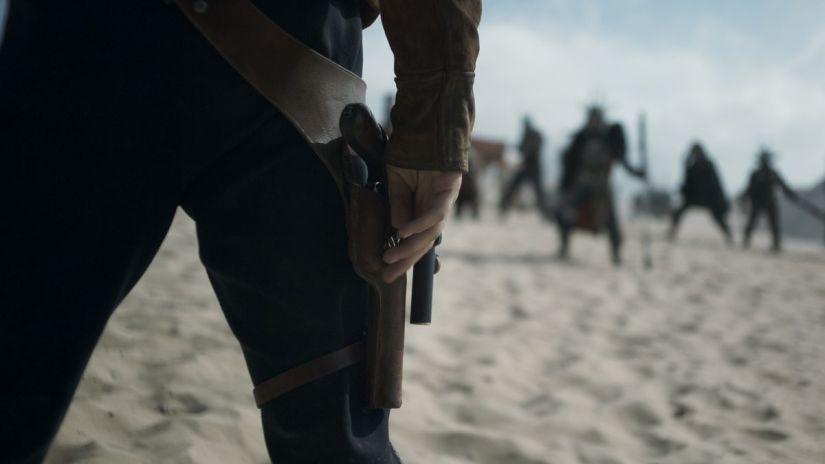
The Western has always been a key influence in the iconography and aesthetic of Star Wars. The figure of the lone gunslinger is found in characters like Han Solo and Din Djarin. The setting of the frontier finds an echo in the Outer Rim of the Galaxy, where lawlessness and adventure prevail. And even the narrative structure of the film Solo echoes American colonial expansion, moving east to west across the continent as Han transitions from street rat to frontier gunslinger.
Characters in Westerns are typically guided by themes such as honour, justice, and revenge. There is a tension between law and lawlessness. Sometimes we may sympathise with the marshal in their struggle against outlaws; sometimes our sympathies lie with the outlaws. Powerful families vie to control resources. Bounty hunters pursue targets across great distances. In Star Wars, these conventions aren’t just limited to tales of the galactic underworld; a Jedi could easily occupy the role of gunslinger, roaming the Outer Rim in a restless quest for justice.
In many ways, the influence of the Western on Star Wars’s iconography and aesthetic means that it is almost impossible to avoid the genre when writing a work of fanfiction. It is embedded in the very fabric of the Star Wars universe. But writers of fanfiction have the opportunity to choose their level of engagement, whether a surface-level look at the existing aesthetics or a deeper exploration of its conventions.
Examples: The Mandalorian, Solo, The Book of Boba Fett
Dystopian
With an evil Empire oppressing the Galaxy, it’s not hard to see the connections between Star Wars and dystopian fiction. In this genre, the government itself functions as the antagonist; its laws oppress, disempower, and marginalise people. Characters might rebel against authority, while others will choose to enforce that authority.
In Star Wars, the Empire’s capacity for oppression has been well-documented. The Empire does not simply wage war on all those who oppose it, but it subjugates whole populations – such as the Wookiees or Geonosians – and forces them into slavery. It eradicates cultures; it uses its overwhelming power to destroy or sterilise entire planets. Even people once considered essential to the Empire are quickly discarded and vilified when priorities change – in The Bad Batch, we see how the Empire turns against its clone army.
With such exaggerated, dramatic villainy, it can be easy to lose sight of how authoritarianism impacts people in their everyday lives. There is a lot of scope for this to be explored in fanfiction. Tales about restrictions on freedom of movement, freedom of speech, petty moments of discrimination and marginalisation can make for compelling, character-focused stories which are every bit as impactful as the bombastic planet-destroying action we see in the movies.
The series Andor and The Bad Batch are most effective at displaying the dystopian elements of Star Wars, but even the episodes “Justice” and “Choices” from Tales of the Jedi explore how even the well-meaning Republic disenfranchised its citizens.
Examples: Andor, The Bad Batch.
War
War stories generally take place on the battlefield.
Themes associated with the genre typically include the futility of war, camaraderie between soldiers, the death of loved ones, and the psychological impact of warfare. Protagonists are often soldiers, but they can also be innocents caught up in the conflict. Characters rarely escape conflict without experiencing some sort of trauma. For this reason, war stories can be harrowing and difficult to write, forcing writers to confront their own beliefs about life and death. It might also bring up our own traumas.
In the long history of the Galaxy Far, Far Away, there is no shortage of battles to form the backdrop of a story. The key to writing an effective war story is deciding what you want to say about this battle. Are the characters merely present as props to show the horrors of war? Or does the battle function as some sort of catalyst for a character, a crucial part of their emotional arc? A story in which the characters simply go around shooting Stormtroopers might lack significance if it is not rooted in something deeper, more meaningful – a character’s quest, a journey, a desire, even if it’s simply the desire to survive.
Examples: Rogue One

Romance
It can be helpful to think of romance fiction as belonging to two broad categories: comedies and dramas.
In a comedy, the barriers keeping the lovers apart are often playful or frivolous, sometimes contrived by the lovers themselves because their pride prevents them from admitting their feelings. The tone is light-hearted. The happy ending is inevitable. Although the love stories in Star Wars often have comedic moments, the franchise has yet to explore romantic comedies in any serious way.
Romance fiction in Star Wars is better represented as a drama. The barriers which prevent the lovers from being together are often serious and life-threatening, imposed on them by forces over which they have little control. The lovers may be on opposite sides of the Galactic Civil War (Lost Stars by Claudia Gray). One of them may have sworn an oath to the Jedi Order (Attack of the Clones). Or their budding romance may be disrupted by the machinations of the Galactic Empire (The Empire Strikes Back).
In writing romance, there must be chemistry between the characters. We should see their connection pop and sizzle and understand why they want to be together. Dialogue is crucial to building this connection; it is through dialogue that the reader is invited to share in the flirtation, to understand their points of view. In writing this dialogue, ask yourself: What is the point of connection between these characters? Is it physical, intellectual, or spiritual? How do they respond to each other? How do they connect and disconnect from each other? When one moves forward, does the other move forward too, or do they retreat, overcome by pride or anxiety?
Once you have established their romance, it is time to introduce the complications. What is the barrier that is keeping them apart? How is that barrier significant? And, most importantly: Will their love survive or perish?
Examples: Attack of the Clones, Lost Stars by Claudia Gray.
Detective fiction
Detective fiction has given film and literature one of the most enduring character archetypes: the detective. From Sherlock Holmes to Miss Marple, Benoit Blanc to Veronica Mars, Clarise Starling to Jake Peralta, detectives proliferate through all forms of fiction. The detective is defined by their keen ability to uncover the truth, to sift through clues in the dogged pursuit of justice.
We are so familiar with the role that it becomes easy to map these traits onto existing characters. Obi-Wan Kenobi becomes a detective in Attack of the Clones as he tracks down Jango Fett. Ahsoka becomes a detective in The Clone Wars episode “Sabotage”, as she investigates the bombing of the Jedi Temple.
But aside from the archetype of the detective, detective fiction has given an even more important element to storytelling: a structure. Detective stories will usually start with a crime – often a murder – and as the story progresses, it is the detective’s role to uncover the events which preceded to the crime: the motivations, circumstances, people involved. This structure has been identified as Story One and Story Two. Story Two shows us the detective working to solve the crime; Story One is what happened before the crime was committed, revealed to us piece by piece as the detective finds clues.
This dual narrative structure can easily be combined with other genres; science fiction and fantasy are filled with numerous examples. In fact, it has become so ubiquitous to storytelling that it has become an intuitive structure, one that is almost invisible because it is used so frequently. Writers of Star Wars fanfiction can use it to allow their favourite characters to become detectives, or to help provide a familiar and intuitive framework to a story which might be otherwise lacking structure.
Examples: The Clone Wars episode “Sabotage”, The High Republic: Trail of Shadows graphic novel
Spy thriller
Spy thrillers share many conventions with detective fiction. But while the detective usually investigates crimes committed by individuals, the spy investigates crimes being committed by states or organisations. To do so, they use many of the same techniques as detectives, but often face the additional challenge of doing these things while undercover. Spies operate in the shadows, in the morally grey areas between good and evil.
In the genre of spy thrillers, the most valuable commodity is information. Spies work to expose things that are meant to remain secret. In Star Wars, this could be something as big as the Death Star or something as insidious as a politician’s bribes.
Spies are morally ambiguous characters. Their allegiance is to governments and organisations; they might be sold or bought with the right leverage. They might not align themselves with any particular philosophy. Alternatively, they might be rigid in their beliefs, so adamant that their faction is right that they are unable to see beyond their own dogma.
Writers of spy thrillers must be meticulous in how they reveal information to the reader. Tension simmers in the gap between knowing and not knowing. Information should be revealed piece by piece. At first, each new piece should lead to more questions, deepening the puzzle. The reader, like the spy, is missing the crucial context which allows this information to make sense. But as the narrative moves towards a climax, each new piece of information adds to the context. By the end, we can see the entirety of the puzzle and the spy is either victorious or defeated.
Examples: Andor, Rogue One
High fantasy
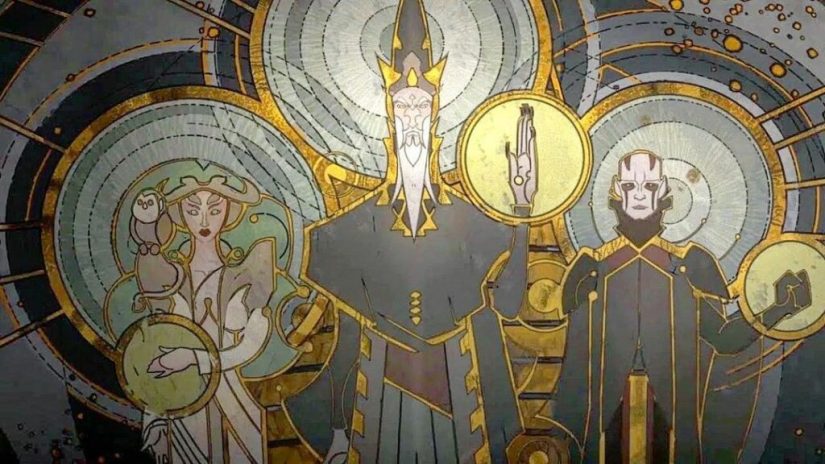
With Jedi and the Force, Star Wars has always drawn upon the elements of fantasy in its storytelling. But occasionally it leans a little further into the genre, focusing on magical and mystical elements that might seem out of place amongst the more science-fictional trappings of the franchise. The Clone Wars introduced us to the Mortis Gods and Force Priestesses. Rebels featured the hyperspace-travelling Loth-Wolves and the World Between Worlds. Ahsoka took us to Peridea, a world where witches resurrect their dead and battle against savage marauders.
Don’t be afraid to embrace the more magical aspects of the Galaxy in your storytelling. The Jedi might be the most prominent of the Force religions shown in Star Wars, but they are no means the only ones – the Nightsisters, the Zeffo, the Sorcerers of Tund, the Disciples of the Whills, the Lonto, the Matukai, the Fallanassi, the Yacombe, and the Brothers of the Ninth Door all have their own beliefs and special powers. And then there are the more esoteric aspects of the Force – the Force Priestesses, the World Between Worlds, and the Mortis Gods – which demonstrate magic beyond our ability to comprehend. Star Wars is often at its best when it goes beyond the Jedi and explores these more mystical elements of the Force.
Examples: Ahsoka, The High Republic Phase 2 graphic novels.
Political thriller
It is a testament to the writers of Andor that they were able to extract so much drama and tension from the plotline of a politician trying to hide her finances. As Mon Mothma finds ways to avoid suspicion and cover her tracks, with the Empire’s fist squeezing ever tighter, we can feel the building of tension. The fate of the nascent Rebellion hangs in the balance.
Political thrillers have a lot of similarities to spy thrillers. Both genres feature betrayal, subterfuge, and the weaponisation of knowledge. But where spy thrillers usually take place out in the streets, political thrillers take place in Senate chambers and offices. The true currency of a political thriller is power. Those who have it wield it to achieve their goals; those who covet it will do anything to gain it. Like spies, politicians can be morally ambiguous characters. They might claim allegiance to certain factions, but they will often do anything to gain power for themselves. In political thrillers, no one can be trusted.
All eras of Star Wars storytelling have opportunities for gripping political thrillers. The Fall of the Jedi era might see politicians jockeying to gain power in the waning days of the Republic. The Reign of the Empire might see Imperial officers fighting each other to gain favour as their armies sweep across the Galaxy. And the New Republic era might see a mix of former Rebels and Imperials adjusting to the new status quo and trying to sway the Galaxy towards freedom or back towards tyranny.
Examples: Andor
Young Adult
Young Adult (YA) fiction differs from the genres listed above because it is not foremost a genre defined by its content. It is defined instead by its intended readership, typically 12 to 18 year olds. However, it does demonstrate commonalities in its themes, especially themes of identity and coming-of-age.
Star Wars has plenty of opportunities for writers looking to engage with these themes. Fanfiction is often written by authors who fit within the 12 to 18 age demographic, and these authors may be looking for a chance to explore their own experiences through fiction. Identity and coming-of-age are important in a galaxy where there are evil forces working to suppress and marginalise people; these can reflect experiences that happen in our own world.
Examples: The High Republic: Into the Dark, The High Republic: Out of the Shadows, The High Republic: Midnight Horizon, Lost Stars.
Acknowledgements
Like many writers, I am indebted to Tzvetan Todorov’s essay “The Typology of Detective Fiction” for its landmark identification of the dual narrative structure employed within crime fiction.
 Coruscant Writers Club