
by Andrew R. Cameron
So you want to write some Star Wars fanfiction but don’t know how to get started? Perhaps you’ve got an idea but don’t know how to develop it. Perhaps you’ve never written fanfiction before. This guide will take you through all the steps you need to develop your fic from idea to reality.
Identify your inspiration
What do you love about Star Wars? What draws you to its stories? Is it the idea of a heroic Rebellion struggling against the tyrannical Empire? Smugglers running illicit cargo while evading the law? Jedi diplomats solving conflicts in far-flung star systems? Bounty hunters chasing their prey?
When you approach fanfiction for the first time, it is often helpful to ask yourself the big question: Why? Why do you want to write a Star Wars story?
In our article about why people write Star Wars fanfiction, we suggested a few reasons why writers might be drawn to the franchise, whether it is a desire to actively engage with a fandom or because they find echoes of themselves in its stories.
The options for storytelling are unlimited. The key is to finding what sort of story you want to tell.
Find your story
The question of where writers get their ideas has as many answers as there are writers. There is no secret formula or cheat sheet. Ideas sometimes arrive in a flood, other times they appear one drop at a time, with great effort. If you’re struggling to find inspiration for a story, it may be a sign you need to focus elsewhere for a while and give your brain time to relax. You could also try to “read around” the topic – read some other works of fanfiction, read some published Star Wars novels, rewatch the movies or tv shows. Focusing on absorbing narratives is a great way to inspire your own creativity.
Regardless of what happens in your fanfiction, there are common elements which make a good story. To tell a compelling story, remember this short formula:
Desire + Danger = Drama
In order to create effective drama, your characters must desire something. The object of desire could be another character, an item, or the freedom to live differently.
However, there must also be danger – the characters must be prevented in some way from obtaining their desire. Perhaps this danger takes the form of a villain. Perhaps it’s an obstacle – an asteroid field or a hostile environment. Perhaps it’s an oppressive government that restricts the character’s freedom.
A story without danger has no tension, no stakes. Characters do not have the chance to overcome obstacles. They do not have the chance to grow. Character development stagnates without the element of danger. It also means your story cannot be structured effectively; narrative structure relies heavily on a sense of progress, of characters moving towards and confronting the forces arrayed against them.
If you’re stuck on ideas, you can also check out our 50 Star Wars writing prompts.
Find your characters
For many writers of fanfiction, this will be the easiest step. Perhaps you wanted to write fanfiction specifically to tell more stories about Luke Skywalker or Princess Leia. In that case, you already know who your characters are! But if you don’t know who will star in your story, you may want to consider inventing a new character.
Star Wars is full of big, bombastic heroes. But it is also full of ordinary folk who exist in the background. Any one of these ordinary folk could have a story just as compelling as one of the heroes.
When creating a cast of original characters, an important question to ask is: Why have you chosen this character for this story? Do they allow you to capture a specific point of view? Are they reinforcing or resisting the status quo?
Even if your main characters are already well-known to fans, it’s still worth getting to know them. Read up on their backstories. What motivates this character? Where do they come from? Where will they end up? What experiences have shaped their life? How do they treat others? Most importantly: Why have you chosen to write about this particular character? What unique point of view or quality do they bring to your story?
Some writers may want to consider archetypes when creating their characters – the role that the characters play within the story. However, this is not necessary for the first draft, and sometimes the character’s impact on the narrative only becomes clear when the first draft is complete.
Setting
Your plot might already determine what planets are featured in your story, but if it is open to be set anywhere, you are absolutely spoilt for choice. Star Wars has hundreds of locations from which to choose, from the towering skyscrapers of Coruscant to the swamps of Dagobah, from the lightning-seared wastelands of Exegol to the icy ravines of Maldo Kreis.
Star Wars is somewhat famous for having single biome planets – planets that are entirely covered by desert, or swamp, or forest, etc. Although this trope can become a little repetitive, it can be an engaging opportunity to lean into this type of storytelling and really flesh out how life would work on those planets. For example: We know that farmers on Tatooine extract precious moisture from the air in order to survive, while the Wookiees on Kashyyyk live in tree-top cities which are suspended hundreds of metres above the ground. Characters on those two planets would have radically different ways of interacting with their environments. Setting should never be passive; if you’ve chosen a certain planet (or biome), make it essential to the story in some way.
Setting is not just location – it also includes when the story is set. Current Star Wars canon is split into nine different eras, spanning thousands of years from the dawn of the Jedi to the New Jedi Order. Legends canon has an even longer timeline! Like a location, the choice of when the story occurs should always be deliberate. Some stories can be told equally effectively across multiple eras, but the era you choose should have some bearing on the character’s beliefs, their shared histories, their freedoms, their fashion, and – of course – their access to technology.
Aesthetic
“What a piece of junk!” Star Wars has a distinct aesthetic to it, one that immediately sets it apart from other science fiction franchises.
This is mainly due to the concept art of Ralph McQuarrie, who gave Star Wars a gritty, lived-in feel, a universe populated not with gleaming, brand-new starships and futuristic planets, but rusting pieces of junk and worlds which borrow more from our past than from our future.
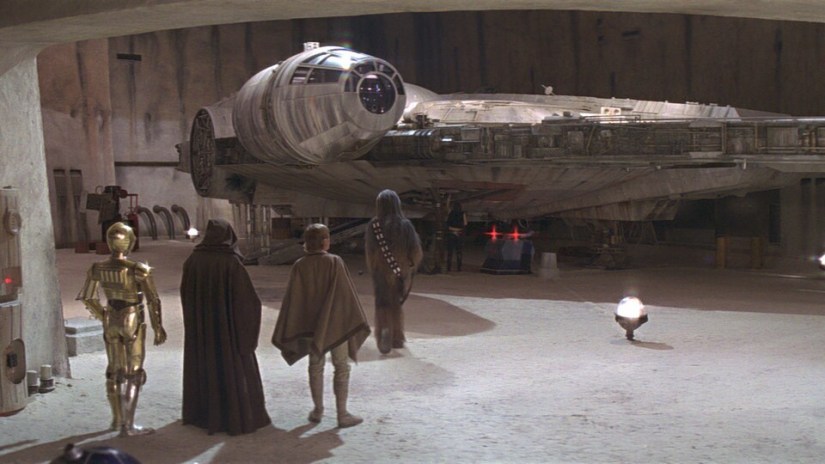
But how do you capture the feel of Star Wars in your writing? One way to approach it is to imagine a backstory for every ship or item of technology your characters encounter. How many previous owners did this thing have? Did they take care of it? Has it been discarded or lost? Been damaged in battle? How was it passed down to its current owner? If the thing is brand-new, why does your character cherish or want it? What purpose does it serve them? Asking such questions will make the ship or item more like a character than a prop, rich in detail.
Do your research!
One of the most enjoyable aspects of writing fanfiction is taking a deep dive into Star Wars lore. There is a wealth of information out there, from Wookieepedia to reference books to the Star Wars Databank.
Doing your research helps you to include specific, concrete details in your story. As with all fiction, concrete details help the story to come alive. For example: instead of writing “his hand rested on his blaster”, write “his hand rested on DL-44 blaster pistol.” However, there is a limit to how much concrete detail should be included. Too much detail can slow the story down, making it feel like you’re simply rattling off facts and names rather than focusing on telling an engaging tale.
It’s your choice to follow established lore or not. You might want your story to align with canon as much as possible; you may want your story to align more with Legends canon. You can also ignore canon and lore restrictions altogether – you are the author, you make the rules.
Decide upon a form
Once you know which story you want to tell and who your characters will be, it’s time to focus on how you’re going to tell this story. Is it going to be a standalone short story? A novel?
Although it is sometimes tempting to write a sprawling saga, not all stories need to be hundreds of pages. There is a real skill in being able to tell a succinct, effective story. Length is best determined organically. Start writing and allow the story to tell itself. Some stories can be told effectively within 1,000 words. Others take 100,000 words or more.
However, it is important to recognise what is necessary to include in a story. Each sentence should aim to either build character or advance the plot. In genres such as science fiction or fantasy, where worldbuilding is crucial to creating a believable world, worldbuilding details should always advance the plot. If a detail is included which is not necessary for the reader to know, then it should be deleted.
The mechanics
At this point it is probably best to just start writing – the more technical aspects of crafting a narrative can wait until you’re working on the story, and many of them may occur organically without any planning.
But there are a few things you may want to keep in mind:
Point of view determines whether the story is told in the first-person (“I activated the lightsaber”), second-person (“you activated the lightsaber”), or third-person (“he/she/they activated the lightsaber”). None of these are necessarily better than the others, but they each have their advantages for controlling how connected the reader can feel to the characters and narrative. Emerging writers will often find they are naturally drawn to one or another.
While tone can be established by the aesthetics described above, it is more commonly conveyed through your choice of words (diction), sentence length and structure (syntax), and things like dialogue. Star Wars has a range of tones across its media; compare the gritty, character-driven drama of Andor with the fantasy heroics of Ahsoka.
Structure is more than just length – it also includes narrative devices such flashback. Do you want to tell your story in a linear fashion? If you’re going to tell the story out of order – why? Why have you chosen to present the scenes in this order? Often the purpose of telling a story out of order is to preserve narrative tension – you reveal crucial background details to the reader only when they become necessary to know.
Star Wars stories can fit into any number of different genres. What started out as a combination of science fiction and fantasy (or space opera or space fantasy… however you’d like to frame it) has now evolved to include spy thrillers like Andor, war stories like Rogue One, romances like Claudia Gray’s novel Lost Stars, and comedy-dramas like the Doctor Aphra graphic novels. Don’t be afraid to experiment with genre; it provides the opportunity to take your stories in exciting new directions.
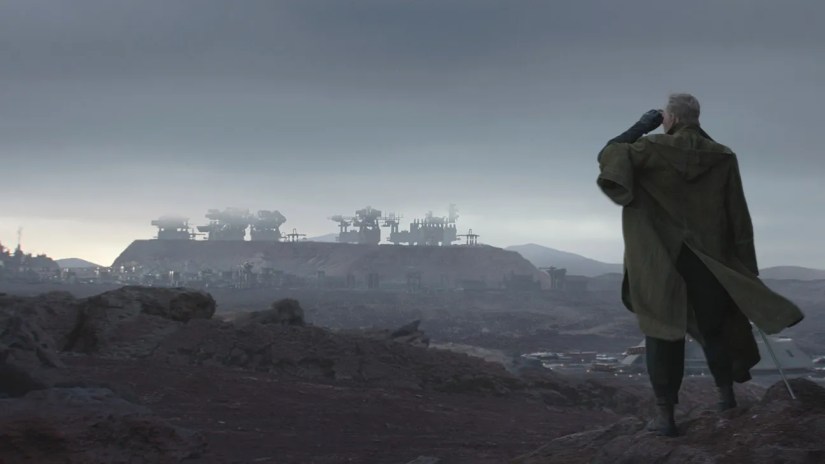
Theme
Theme is one of those nebulous concepts that might not be clear until you’ve already finished a first draft of your story. It is the experience of many writers that some themes remain invisible until they appear suddenly on the page, blindingly obvious as if they’ve been there all long. These sorts of little discoveries are part of the joy of writing.
However, sometimes a theme is apparent in the planning stages of your story. It might jump out at you as soon as you have an idea. If this is the case, you can use the theme to guide the development of your narrative. Ensure that the characters’ journeys are consistent with the theme; choose imagery and metaphors which speak to it. Interrogate its message – show how different characters interpret it, are guided by it, live by it. Show how it impacts people differently. Remember, each reader will have a different experience of that theme. Your role as the writer is not to convince them that your interpretation or meaning is correct, but to allow readers the opportunity to create their own meaning.
Don’t worry about getting it right
Any writer will tell you that your first draft is not going to be perfect.
And it doesn’t need to be. The first draft is where you explore your ideas and characters, where you work out what the plot is going to be. Refining your writing comes in later drafts.
If you find yourself stuck on a paragraph or a scene because you want to get it right, the best thing you can do is leave it and move on with the story. Sometimes it takes some time and distance from your writing to be able to recognise how you can improve it.
We hope our advice is helpful in getting you started on your fanfiction journey!
Acknowledgements
Like many writers, we are indebted to Janet Burroway’s Writing Fiction: A Guide to Narrative Craft for some of the advice given above.
 Coruscant Writers Club